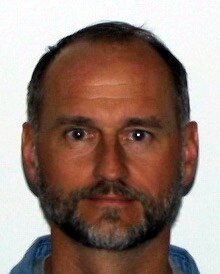
3B7C Operators:
|
Name: |
DXpedition Experience:
Significant Operations:
Saudi Arabia, Azerbaijan, Curacao, ITU Geneva, Puerto Rica, Israel, Seychelles, PRChina, Australia, Aland Is., France, Spain, Canada, Finland, Sweden, Switzerland, European Russia.
Other Calls:
Club Memberships:
Yankee Clipper Contest Club
Potomac Valley Radio Club
Home Page: www.k3na.org
About Eric:
At age 12 Eric found two books of interest on his father's bookshelf: "A Pilot's Guide to the Weather" and the 1948 edition of the "Radio Amateurs Handbook". But railroads were a childhood interest so it was another few years before he built a battery powered, two-tube regenerative receiver from the Handbook on a piece of plywood. Mr. and Mrs. Carter, the backyard neighbors, took pity and sold him a National NC-250 25th anniversary receiver with bandspread ham bands for a price that a kid could afford. A few months later a local ham across Lake Skaneateles gave Eric his Novice exam. The examiner was also a MARS operator with a basement full of teletype machines. Some endless weeks later Eric's first license arrived: WN2CAL. He fired up a Knight T-60 crystal-controlled transmitter on 40m. A few months later he won his first contest: CW Sweepstakes Novice Western New York, with a full-time 24-hour effort totaling few dozen hard-earned QSOs. (Try explaining contest rules at 5 wpm...)
After sitting for his General class exam and receiving WA2CAL, Eric spent free hours after high school on CW traffic nets and chasing the odd CW DX station. Howie Mann W2FR spent many hours coaching Eric on the ins and outs of DXing, traffic handling, and contesting. Eventually Eric became qualified as an Official Relay Station and operated Transcontinental Corps schedules. He continued to interfere with his elderly neighbor's old TV and AM radio, to their great delight as they were retired railroad telegraph operators! "The code's far better music than that trash rock and roll you hear these days..."
Intrigued by those teletype machines he had seen at the local weather station and his Novice examiner's home, in 1967 he joined the Navy-Marine Corps MARS program (a military radio network employing ham operator volunteers and which used 100 wpm RTTY extensively for message handling). He built terminal units and learned to repair, disassemble and reassemble Teletype and Kleinschmidt machines. At Cornell University his dormitory room was stuffed with radio and Teletype gear; a 200m long wire suspended between his window and the top of a nearby 12 story building served as an antenna. The Navy awarded him the first civilian Radioman Master Chief rating, and shortly thereafter he was promoted to Senior Chief. He also passed examinations for the Speedkey (CW) and Teletype certificates.
Eric received a B.Sc. in Atmospheric Physics in 1974 (partially financed through fees earned by repairing the campus' laboratory computer teletype consoles) and, after a year of graduate study (with a minor in architecture), wandered off to work at the National Weather Service headquarters. His communications experience quickly sidetracked him away from tornado and hurricane forecasting research and into data networking. In addition to system software development, during the 1970s and 1980s Eric participated in or chaired many national and international committees which set standards for packet-switching, internet, ISDN and signaling systems. After stints in product management and international sales management at Telenet, Sprint and Alcatel, in 1995 Eric joined a small, commercial internet service provider, UUNet Technologies, as vice president, international development. This was just at the start of the internet explosion, during which Eric's team built a multi-billion dollar international internet business through which 40% of today's traffic passes. He retired in 2000 but does occasional consulting work on telecommunications/high tech management problems and mergers/acquisitions.
Along the way the DXpedition bug bit, beginning with a Potomac Valley Radio Club contest DXpedition to PJ2 and an invitation to the multi-year Clipperton Island odyssey of FO0XX. Over the years Eric worked his DX mentor W2FR from many exotic locations, a very satisfying closing of the circle between student and teacher.
Besides DXpeditioning, contesting, and random CW chit-chat with friends, Eric has done extensive antenna modeling, developing new analysis tools. Currently he is in the midst of a series of articles in the "National Contest Journal" applying these tools to Yagi stacks; see www.ncjweb.com/bonus.php.
After five years in Moscow, Eric and his wife Mary Yntema moved to Charlestown Massachusetts. He has a modest city apartment station about 100m from the birthplace of Samuel F. B. Morse. For contests Eric joins the team at W1KM's QTH.
Other interests include sailing (occasional big boat cruising; and racing his Tornado catamaran, an Olympic class racing machine), bicycling, travel, parties, live jazz and other late-at-night big city activities of which Mom might not approve.